

Platelet-Rich Plasma (PRP) therapy has gained significant attention as a regenerative medicine treatment used to support healing in a variety of musculoskeletal and aesthetic applications.
PRP therapy uses a concentrated portion of the patient’s own blood that contains platelets and growth factors. These components are then injected into targeted areas to support the body’s natural healing response.
At Dynamic Stem Cell Therapy in Las Vegas, PRP therapy is offered as part of personalized regenerative medicine treatment plans for patients seeking non-surgical options for pain, injury recovery, and hair restoration.
What Is PRP Therapy?
Platelet-Rich Plasma (PRP) therapy is a procedure that uses a concentrated portion of a patient’s own blood to support tissue healing and recovery.
Blood contains several components, including:
- Red blood cells
- White blood cells
- Plasma
- Platelets
Platelets contain growth factors and proteins involved in the body’s normal healing response. PRP therapy concentrates these platelets into plasma, which is then injected into a targeted treatment area.
How Does PRP Therapy Work?
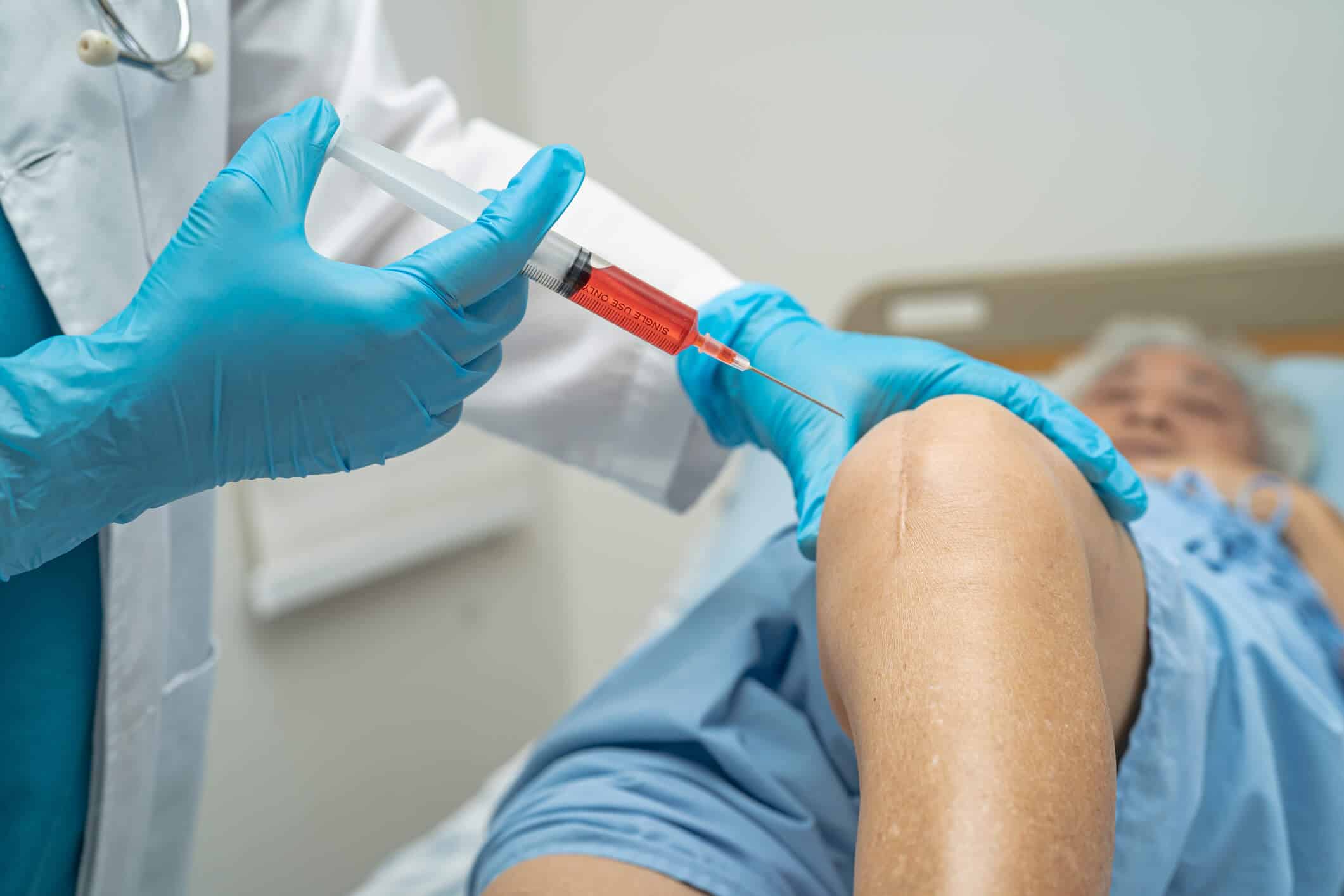
PRP therapy is designed to deliver a concentrated amount of platelets and growth factors directly to an injured or symptomatic area.
These biologic components may help:
- Support the body’s natural healing response
- Promote tissue repair processes
- Assist with inflammation management
- Encourage recovery in damaged soft tissues
Because PRP uses the patient’s own blood, it is considered an autologous treatment.
The PRP Procedure
PRP therapy is typically performed in-office and generally takes 30 to 60 minutes.
Step 1: Blood Draw
A provider draws a small amount of blood from the patient.
Step 2: Centrifuge Processing
The blood is placed into a centrifuge, which separates the platelet-rich plasma from other blood components.
Step 3: Injection
The concentrated PRP is injected into the targeted treatment area. In some cases, ultrasound guidance may be used for precision.
Step 4: Recovery
Patients can often return to light activity shortly after treatment, though post-procedure recommendations vary by case.
Conditions Commonly Treated with PRP Therapy
PRP therapy may be used in treatment plans for a variety of conditions, including:
Sports Injuries
PRP is commonly used in regenerative medicine protocols for sports-related injuries such as:
- Tennis elbow
- Rotator cuff injuries
- Ligament sprains
- Muscle strains
- Knee injuries
- Ankle sprains
Osteoarthritis
PRP may be used as part of non-surgical management for certain patients with osteoarthritis, particularly involving:
- Knees
- Hips
- Shoulders
- Ankles
Hair Loss
PRP therapy is also used in some aesthetic and hair restoration settings to support scalp health and hair follicle activity.
It may be considered for individuals experiencing:
- Male pattern hair loss
- Female pattern hair thinning
- General hair density concerns
Chronic Tendon Conditions
PRP may be incorporated into treatment plans for chronic tendon issues such as:
- Achilles tendinopathy
- Patellar tendinopathy
- Rotator cuff tendon irritation
- Tennis/golfer’s elbow
Ligament Injuries
Ligament sprains and partial tears may be evaluated for PRP treatment depending on severity and clinical appropriateness.
Potential Benefits of PRP Therapy
Potential benefits may include:
Non-Surgical Treatment Option
PRP may provide a minimally invasive alternative for select patients seeking to avoid surgery.
Uses the Patient’s Own Blood
Because PRP is autologous, the risk of allergic reaction is generally low.
Minimal Downtime
Many patients resume light daily activity shortly after treatment.
Broad Applications
PRP may be used across orthopedic, sports medicine, and aesthetic treatment settings.
Risks and Side Effects of PRP Therapy
Although PRP is generally well tolerated, possible side effects include:
- Temporary soreness at the injection site
- Swelling
- Bruising
- Mild inflammation flare after treatment
- Rare risk of infection
- Rare nerve or tissue injury
As with any medical procedure, treatment should be performed by a qualified provider.
Is PRP Therapy Right for You?
PRP may be appropriate for patients seeking non-surgical treatment options for certain orthopedic, musculoskeletal, or hair restoration concerns.
Candidacy depends on factors such as:
- Diagnosis
- Severity of condition
- Overall health
- Prior treatments attempted
- Individual treatment goals
A consultation and medical evaluation are necessary to determine whether PRP is appropriate for your specific case.
Why Choose Dynamic Stem Cell Therapy?
Dynamic Stem Cell Therapy in Las Vegas offers personalized regenerative medicine treatment plans designed around each patient’s needs.
Our team provides:
- Comprehensive evaluations
- Customized PRP protocols
- Regenerative medicine expertise
- Non-surgical treatment planning
Schedule Your Consultation
If you are exploring non-surgical treatment options for joint pain, sports injuries, chronic tendon issues, or hair loss, Dynamic Stem Cell Therapy may help determine whether PRP therapy is appropriate for your needs.
Contact our Las Vegas office today to schedule your consultation.
Platelet-Rich Plasma (PRP) therapy and other regenerative medicine treatments are not currently approved by the U.S. Food and Drug Administration (FDA) for most orthopedic conditions, sports injuries, arthritis, hair loss, or musculoskeletal pain. Many regenerative medicine applications are considered investigational, and clinical outcomes have not been fully established.
Frequently Asked Questions
What conditions can PRP therapy treat?
PRP may be used in treatment plans for tendon injuries, ligament injuries, osteoarthritis, sports injuries, chronic pain conditions, and hair loss.
Is PRP therapy painful?
Most patients tolerate PRP well, though some discomfort may occur during injection depending on the treatment area.
How long does it take to see results?
Results vary by patient and condition. Some individuals notice improvement within several weeks, while others may require more time.
How many PRP treatments are needed?
Treatment recommendations vary. Some patients may benefit from one session, while others may require multiple treatments.
Is PRP therapy safe?
PRP is generally considered safe when administered by qualified medical professionals, though all procedures carry some risk.
Can PRP be used after surgery?
In some cases, PRP may be incorporated into post-surgical recovery protocols depending on physician recommendations.
Is PRP covered by insurance?
Many insurance plans do not cover PRP therapy, though coverage varies by provider and indication.
How long does the procedure take?
Most PRP appointments take approximately 30–60 minutes.
Can PRP be combined with other treatments?
Yes, PRP may sometimes be used alongside physical therapy or other treatment modalities, depending on the care plan.